“Let us note that Sacred Scripture and Tradition give the proper name of angels to those pure spirits who chose God, His glory, and His Kingdom in the fundamental test of their liberty, They are united to God by the consummate love which flows from the beatific vision, face to face, of the Most Holy Trinity.
–Pope Saint John Paul II, Catechesis on the Angels, General Audience: August 6, 1986
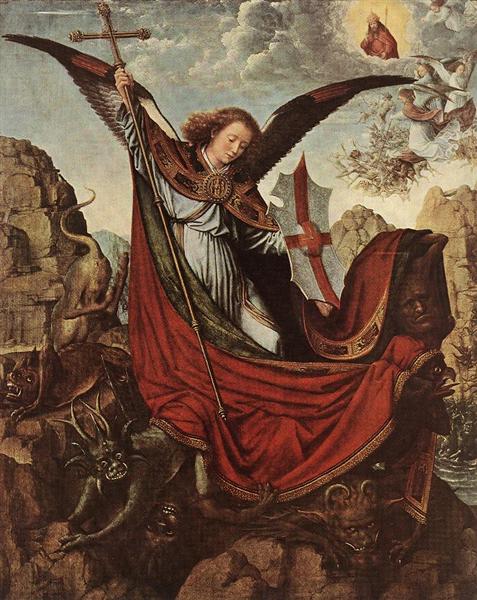
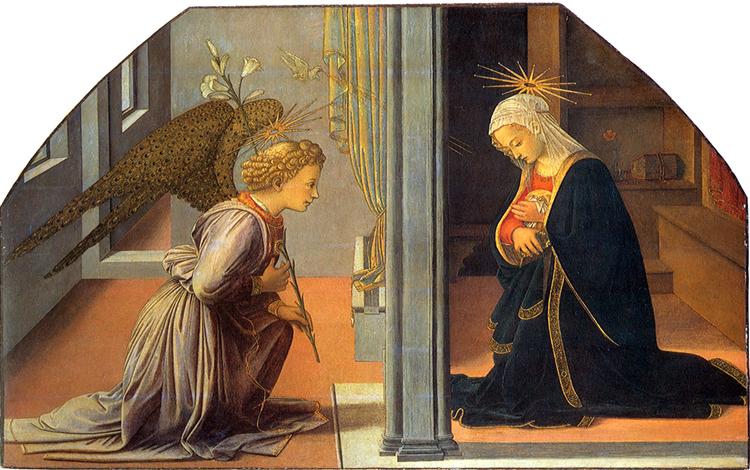
As a convert to the Catholic faith, I didn’t grow up reciting the St. Michael the Archangel prayer, nor the Angelus, nor had I even heard of Raphael. They kicked that part out of our Bible. While I knew of St. Gabriel from the Gospels, he wasn’t introduced to my prayer life until early on in my Catholic days during visits to noon daily Mass at St. Mary’s in Austin. There the Angelus was recited quoting the words of St. Gabriel and Mary as the bells rang out across the city proclaiming what we spoke inside. It wasn’t until recently that I finally memorized and came to really, fervently pray the St. Michael prayer.
I’d heard it around, I think I first heard it prayed on Return to Me, and so for a long time the prayer always resounded with an Irish brogue in my mind. In recent years the prayer became a more frequent one in my life as it is recited at the end of Mass at the parish where the children attend their enrichment program. It always struck me as a powerful one. Then, when the pandemic had us streaming Mass at home, we opted most weeks to pray along with Bishop Baron’s YouTube Mass. After the close of Mass he and his team would recite the St. Michael prayer. Hearing the conviction and fervor with which those three or four men prayed the prayer to St. Michael sealed it as a staple in my current prayer life.
The atmosphere in our world right now is…well…you can see it, right? The suffering, the pain, swells of grief and anger and outrage. All things conquered by Christ, but still playing out in the human race and our insistence on our own way. What do we, what do our souls need right now? Defense in battle, the spiritual battle for our souls. It is not a coincidence that St. Michael’s day is upon us!
The old calendar provided for three separate days to celebrate each of the three archangels mentioned in scriptures. September 29 was reserved for St. Michael, and known as Michaelmas. It’s still referred to as Michaelmas by many, but the new calendar marks this day in honor of Michael, Gabriel and Raphael.
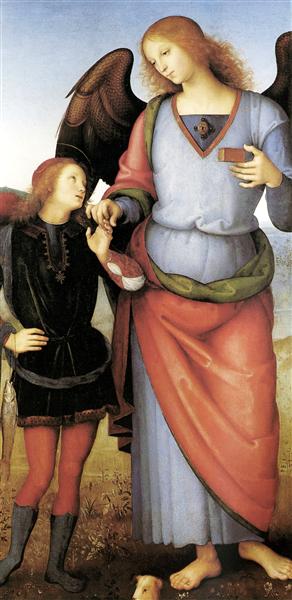
So, who are they? They are spiritual beings created by God, among the multitude of the hierarchy of spiritual beings whose sole purpose is to be in close communion, praise and adoration of their Creator. The word angel is from the greek for messenger, thus we get our angels, or messengers, of God. Michael, Gabriel and Raphael were each tasked with specific messenger roles and messages from the throne of God. Raphael to guide Tobit, Gabriel to announce the births of John the Baptist and Jesus, and Michael to appear to John the Evangelist in the great drama of Revelation.
Here’s how I plan to celebrate these mighty messengers this year:
Reading
We’ll begin with a reading, as usual. Since all three archangels are mentioned in scripture that’s where we’ll turn to hear about them. This year, I’d specifically like to focus on St. Michael. We’ll read from Revelation 12:7-12ab, which is an optional reading for Mass for this feast day. This passage tells of the great scene of St. Michael’s battle with the dragon. Something which will ring familiar to anyone who has seen a piece of artwork or picture containing St. Michael.
In addition I’ll share the following passage from Pope St. John Paul II’s Catechesis on the Angels. This section ends his General Audience address on August 6, 1986:
Ministering Spirits
Finally, it is appropriate to note that the Church honors the figures of three angels with a liturgical cult; these are called by name in Sacred Scripture.
The first is Michael the Archangel (cf. Dan. 10:13-20; Rev. 12:7; Jude 9). His name is a synthesis that expresses the essential attitude of the good spirits. “Mica-EL” in fact means: “Who is like God?” In this name, therefore, we find expressed the salvific choice thanks to which the angels “see the face of the Father” who is in Heaven.
The second is Gabriel: a figure bound especially to the mystery of the Incarnation of the Son of God (cf. Lk 1:19-26). His name means: “my power is God” or “power of God,” as if to say that the culmination of creation, the Incarnation is the supreme sign of the omnipotent Father.
Finally, the third archangel is called Raphael. “Rafa-EL” means: “God heals.” He is made known to us by the story of Tobias in the Old Testament (cf. Tob. 12:15-20), etc.). which is so significant for what it says about entrusting to the angels the little children of God, who are always in need of custody, care, and protection.
If we reflect well, we see that each one of these figures, Mica-EL, Gabri-EL, and Rafa-EL reflects in a particular way the truth contained in the question posed by the author of the Letter to the Hebrews: “Are they not all ministering spirits sent forth to serve, for the sake of those who are to possess salvation?” (Heb. 1-14).
Prayer
There are so many amazing and powerful prayer options to share for this feast day! You can pray the St. Michael Prayer and the Angelus, perhaps even timing your celebration to fall at 12 or 6.
Or, and especially if your crew has a little more patience and attention, pray the Litany of the Holy Angels. A prayer and catechesis all in one beautiful litany! Even if you don’t select this one as part of the celebration, do check it out for your personal prayer time.
Another resource, and one of my go-to’s, is the Liturgy of the Hours. The Office of Readings for this feast includes snippets from each of the Archangel’s stories in the antiphons of the Psalmody.
Activity
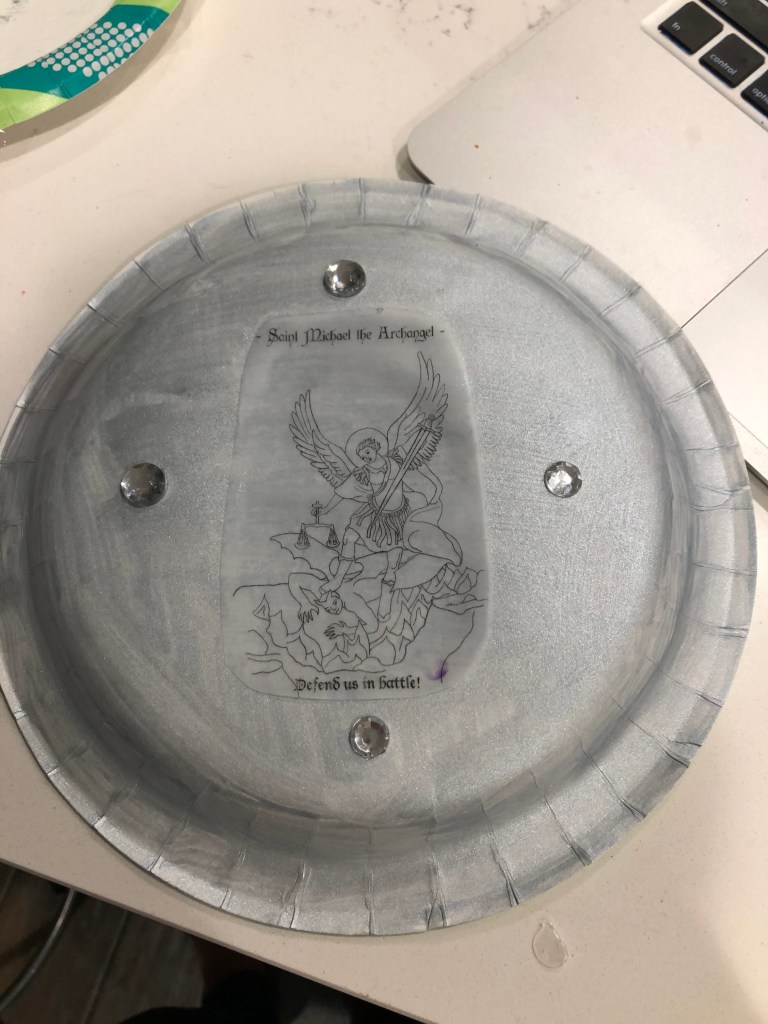
We likely won’t actually get to this, but I wanted to share it anyway. Last year for our co-op I came up with this St. Michael craft for our little 2-4 year old class. Its pretty simple, just takes some preparation. And that preparation was worth it to hear a chorus of wee ones brandishing their shields while proclaiming. “Defend us in battle!”
St. Michael’s Shield Craft
Supplies:
- Paper plates
- Paint brushes
- Silver paint
- Vellum –OR–
- Glue or hot glue
- Decorative jewels
- String or elastic
To make this craft a quick, one step craft, affix a string or elastic to the top of the plate as a handle or arm band and pre-paint the back of your paper plates silver. If you don’t mind a start and stop craft, have the children affix the handle and let them go to town painting.
Then have them decorate the shields. I printed off a scaled down coloring page onto vellum with the words “St. Michael the Archangel Defend us in battle!” surrounding the image. Printing four or six to a sheet makes them the right size to cut out and glue to the silver plate. Alternatively, you can help them paint a simple red cross on the shield and skip the printing and cutting and gluing altogether. Then the little ones decorated with silver craft gems. They spent a good bit of the rest of the day pretending to do battle with the dragon!
Treat
As this day is an old one and has been popular over the centuries in many countries, the traditions are numerous! In Scotland the tradition is to bake a bannock. In part of Italy there’s a traditional gnocchi dish. In France, there’s a certain waffle for this day. You can riff off of the angelic aspect of the day and enjoy angel food cake (we’ll save that one for the Feast of the Guardian Angels) or Angel Hair Pasta. There is a tradition of Michaelmas standing as the last day for good blackberries, so in many traditions blackberries are incorporated.
Our plan is to enjoy waffles for breakfast, especially since it’s the children’s favorite. Then angel hair pasta with our meatballs at dinner followed by blackberry pie with whipped cream for dessert.
As always, I hope this inspires you to deeper prayer and celebration of the richness of our Catholic Faith. We have these powerful intercessors standing at the throne of God, who intercede for us and our world and who can stand as examples and heroes for ourselves and our children. If you decide to celebrate, even if it looks nothing like what’s shared here, I’d love to see it! Do share here or on social media with #holydaysathome and follow this blog there, too @holydaysathome.
St. Michael, St. Gabriel and St. Raphael, messengers of The Most Holy God, pray for us!
 visitation home: life, love, joy